When Villa Almost Went Bust...
As Unai Emery's team prepare to take on Freiburg FC in the Europa Cup Final, a reminder how, less than a decade ago, survival was a close run thing for the Villans.

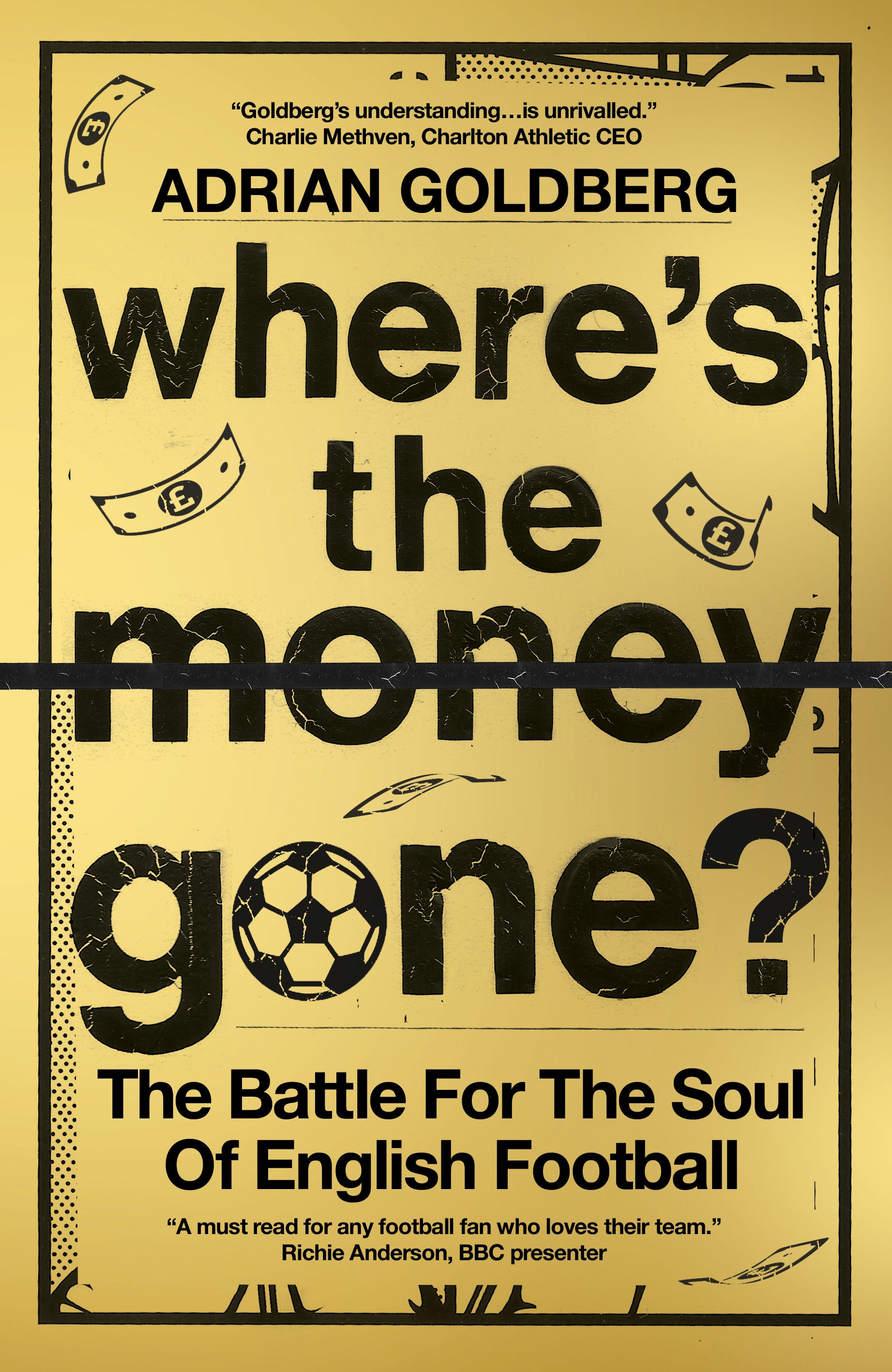
An edited extract from my book, Where’s The Money Gone? The Battle For The Soul of English Football which is available now via Byline Books.

The arrival of Tony Xia at Aston Villa was seen as a cause for celebration by supporters when he arrived in 2016. Xia was hailed as a ‘Chinese billionaire’ - just the man to restore the fortunes of the Birmingham club in the aftermath of relegation from the Premier League.
Villa’s previous owner Randy Lerner has just limped back to the States with a £300 million hole in his pocket. Before that, Doug Ellis had presided over nearly quarter of a century of mediocrity, when what is arguably the biggest club in the Midlands seriously under-achieved. None of this, though, bore any comparison with Xia’s disastrous reign, which left fans fearing the club was on to the brink of extinction.
To get the full story, I head to Billesley, a 1930s council estate in South Birmingham. Broadcaster and social historian Carl Chinn greets me on the doorstep of his unpretentious redbrick semi and declares, “Aston Villa is everything”

Chinn - salt and pepper hair, black and white checked shirt - explains that following the club is, “not just about the football. It’s part of who I am as a person. It’s my family.” He and his father Buck were public adversaries of Doug Ellis, who ruled the roost at Villa in two separate spells, spanning more than three decades.
Ellis was succeeded by US billionaire Randy Lerner who arrived in Birmingham with high hopes and deep pockets. By the time he returned across the Atlantic a decade later, he’d received an expensive education in the unforgiving ways of English football. Under his ownership, Villa plunged into the Championship for the first time in the Premier League era in 2016.
In these circumstances, the arrival of Chinese ‘billionaire’ Tony Xia to replace Lerner in the wake of relegation was warmly welcomed by long standing Villa fans like Chinn.
“The idea that this massively wealthy Chinese guy was going to come in with massive backing was exciting, especially after the decline at the end of Randy Lerner’s ownership when everything seemed to be going wrong. I was thinking this could be good. I don’t think I’m speaking out of turn in saying that Aston Villa is the biggest club in the Midlands, in terms of history and fan base.
“I just thought, ‘why hasn’t somebody grasped this opportunity?’
When Xia arrived at Villa Park, he told The Guardian his target was to make Villa one of the “top three [clubs] in the world – even the best well known in the world – in less than 10 years.” Given that they’d just been relegated to the second tier this sounded a tad optimistic. All the more so when it was reported that Xia’s conglomerate, The Recon Group, had made a loss of £80 million in the previous financial year.
Keith Wyness, an experienced business executive who’d previously worked at Everton, was drafted in as CEO and quickly sensed a problem.
“I probably started to smell a rat on the very first day”, Wyness admits as he speaks to me on Zoom from his home on Merseyside. The boardroom veteran - bald with grey hair around the temples - declares he was “amazed” the takeover was approved under Football League’s Owners and Directors Test.
“Nevertheless, they took him at face value, and he was approved.”
Xia certainly made funds available in his early months at Villa Park, but Wyness recalls that, “by the February of the second season the money dried up completely. I had a real problem, because obviously, the minute suppliers think there are financial problems, there are no sausage rolls on a Saturday.”
When Villa travelled to Wembley in May 2018 for the Championship play off Final against Fulham, newspapers were already discussing the club’s ‘financial nightmare’ if they failed to secure promotion. In the event, a precise, left footed shot by Tom Cairney took the West Londoners up; leaving the West Midlanders staring into the abyss.
Villa were facing a tax demand of almost £5 million and Wyness, as Chief Executive, had a legal obligation to ensure they weren’t trading in insolvency. He started sounding out potential new investors but his efforts were interpreted as undermining Xia. His reward for trying to save the club from going bust was suspension.
He later won a case for constructive dismissal, and in his absence, Villa courted disaster. According to Wyness, they were “probably a matter of days” from going into administration - and potentially out of business.
The dying weeks of Xia’s time in charge at Aston Villa in the summer of 2018 left supporters like Carl Chinn feeling that their club could disappear altogether. Chinn says, “suddenly, there was a fear. It felt like something was being ripped out of you.”
You might imagine that Aston Villa - with seven FA Cups, seven League titles and a European Cup win to their credit - were “too big to fail”, but viewed through Carl Chinn’s historical prism you’d be asking ‘why not?’
Plenty of other hallowed West Midlands institutions had gone under in recent years, so there was no reason to imagine that a football club would be immune.
Big names like Lucas Industries, which once employed 92,000 people around Birmingham had been swallowed up by overseas investors. The HP Sauce factory, a national landmark, was closed in 2007, when production moved to the Netherlands.
Chinn himself had led a campaign to save the talismanic Rover car factory in Birmingham, only to see the company collapse in 2006 with the loss of 6,000 jobs. Over the next few years plant and machinery were physically removed to China in a “lift and shift” operation.
No one seriously expected that Villa Park would be reconstructed brick by brick in the PRC, but there were real concerns that another iconic West Midlands brand might vanish.
In the event, they were rescued in 2018 by billionaire investor Nasef Sawiris and Wes Edens, from Egypt and the US respectively, whose vaulting ambitions matched those of the fans. They helped Villa secure admission to UEFA’s elite competition, the Champions League for the first time in more than four decades, following a fourth placed finish in the Premier League in 2023-24.
For Carl Chinn, it was nothing less than Villa deserved - and an almost unbelievable transformation from the threat of bankruptcy under Chinese ownership just a few years earlier.
“We all felt it was close,” he acknowledges, with the air of a man suffering PTSD. “You’re thinking, there’s this grand old club, formed in 1874, second winners of the Double, winners of the European Cup, a club that is connected to the community, and we could have ended.
“There was this real concern. Will we be playing football next season? Will there be an Aston Villa? I can’t imagine my life without the Villa”.
Read the full version of this and many other stories in my book Where’s The Money Gone? The Battle For The Soul of English Football which you can order here.